Online sermons look at how to write a topical sermon, an expository sermon, an evangelistic sermon, a funeral sermon, a Christmas sermon, an Easter sermon and a wedding sermon from a deductive and inductive perspective.

There are many ways to write and present sermons. However, if you learn the deductive and inductive methods, you will have a better understanding of how to write and present sermons to your congregation that have a natural flow and progression.
I encourage my students to learn the deductive method first. Once they master the deductive method, then I encourage them to learn and master the inductive method. Therefore, in this post I will briefly explain the deductive method of sermon outlining and the inductive method of sermon outlining. I will use Lowry’s loop as the framework for the inductive method.
How To Write A Deductive Sermon Outline
A deductive sermon outline begins with the main preaching point followed by the sermon sub-points (some people call them main points) that expand and explain the sermon’s main preaching point.
The Main Preaching Point
When the apostle Peter wrote to the churches scattered throughout the five Roman provinces of the peninsula of Asia Minor, he encouraged them to live a normal, victorious Christian Life (1 Peter 2:4-10). Living a normal, victorious Christian life can be used as the main preaching point for this passage of Scripture.
The main preaching point is the topic of your sermon or the main subject of your sermon. When you develop the main preaching point, you need to create an angle or perspective to your main preaching point. For example, are you going to look at how to live a normal, victorious Christian life or are you going to look at why you should live a normal, victorious Christian life or are you going to look at the benefits of living a normal, victorious Christian life? When I wrote this sermon, the passage of Scripture in 1 Peter 2:4-10 looked at how to live a normal, victorious Christian life. That became the angle or perspective from which I preached the sermon.
The Sermon Sub-points
Once you have your main preaching point, you will need to develop sub-points that expand and explain your main preaching point. For example, the apostle Peter gave four keys for living a normal, victorious Christian life. These four keys involved …
- Ongoing fellowship with Jesus (1 Peter 2:4-5)
- Ongoing trust in Jesus (1 Peter 2:6-8)
- Ongoing identity with God (1 Peter 2:9a)
- Ongoing witness for God (1 Peter 2:9b-10)
The Deductive sermon outline would look like this:
There are four keys for living a normal, victorious Christian life (1 Peter 2:4-10). They are …
- Ongoing fellowship with Jesus (1 Peter 2:4-5)
- Ongoing trust in Jesus (1 Peter 2:6-8)
- Ongoing identity with God (1 Peter 2:9a)
- Ongoing witness for God (1 Peter 2:9b-10)
For more articles (online sermons) on how to write a sermon or a sermon outline, click on Sermon Articles.
How To Write An Inductive Sermon Outline
An inductive sermon begins with the sermon sub-points which lead to the main preaching point. In other words, an inductive sermon is the opposite of a deductive sermon in structure.
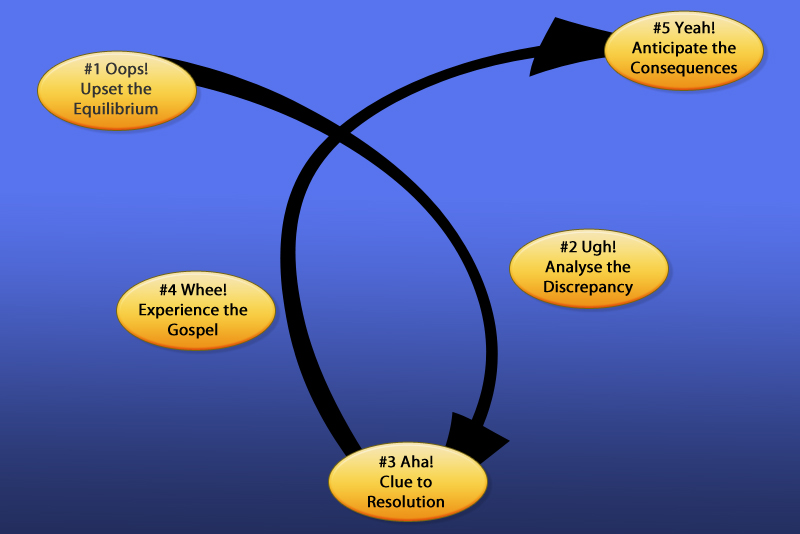
The Main Preaching Point
When Doctor Luke wrote about the prophet Zachariah and his challenges, we learn from this story that tests ultimately help us to praise God (Luke 1:57-30). When Zachariah obeyed God’s word and named his son John, his tongue was loosed and he praised God. What a wonderful truth for us all to learn! Tests help us to praise God. This is the sermon’s main preaching point.
The Sermon Sub-points
The sub-points involve Zachariah being tested, learning to trust God in these tests, and obeying God and His word during these tests.
So, how would you prepare and present this story inductively?
Well, your inductive sermon could look like this:
- Why tests?
- You know, Zachariah went through tests in his life (Luke 1:57-62)
- In many ways, tests show if we really mean business with God (Luke 1:63-64)
- But also, tests help us to trust and obey God and His word (Luke 1:63)
- Ultimately, tests help us to praise God (Luke 1:64-80)
- So, don’t begrudge tests because we can learn so much from the tests we face each day
Notice, the main preaching point in an inductive sermon is delivered at the end of the sermon; whereas, in a deductive sermon, it is delivered at the beginning of the sermon.
For more articles (online sermons) on how to write a sermon or a sermon outline, click on Sermon Articles.
Resources For Online Sermons
Stephen F. Olford, Anointed Expository Preaching
Haddon W. Robinson, Biblical Preaching: The Development and Delivery of Expository Messages
Bryan Chapell, Christ-Centered Preaching: Redeeming the Expository Sermon
Charles W. Koller, How To Preach Without Notes
James Braga, How To Prepare Bible Messages
Eugene Lowry, The Sermon: Dancing The Edge of Mystery
David Buttrick, Homiletic Moves and Structures
Steven D. Mathewson, The Art of Teaching Old Testament Narrative
Eugene Lowry, The Homiletical Plot: The Sermon as Narrative Art Form